


A significant portion of how people perceive and interpret a brand is through communication. Any message that a brand posts, whether it is an advertisement, a social media post, an email, or even a conversation, influences the perception of the people. People lose interest and trust when communication is unclear or confusing.
Here, the 7 Cs of Communication come in. They serve as a simple guide to assist people, brands, and organizations in communicating effectively and clearly. By following these principles, brands will be able to establish better relationships, provide more efficient messages, and generate long-term growth.
The 7 Cs of Communication
The 7 Cs of Communication are easy concepts that assist individuals in exchanging messages in an understandable, meaningful, and respectful manner. In our daily lives, we are communicating all the time, in the form of words, writing, emails, social media, advertisements, and discussions. When a message is not clear, it may result in misunderstanding, frustration, or lack of trust.
This is the reason why good communication is very important, particularly to brands and businesses. The 7 Cs are a checklist that can be used to make sure that your message is easy to digest, properly structured, and can be easily read by the audience. When these principles are followed, communication becomes easier, more efficient, and effective.
Let’s understand each of the 7 Cs in a simple and practical way.
Clear

Clear communication refers to the ability to communicate your message clearly. The viewers do not need to guess your intentions. When communication is clear, it is understood by the people the first time they read or hear it.
Using simple language, avoiding jargon, and focusing on one main idea at a time helps improve clarity. In the case of brands, effective communication makes the customer know what the brand is offering and what they have to do next.
Concise
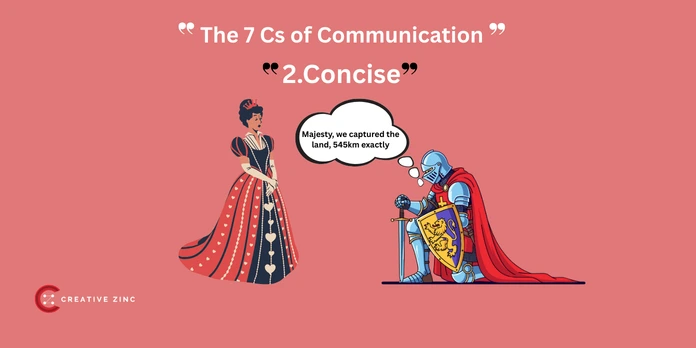
Short communication refers to the act of communicating concisely, that is, with fewer words but with meaning. Nowadays, the modern world is so busy and impatient that people do not find time and patience to read long and needless information.
A message that is concise, straight to the point and to the point is easy to remember and captures attention fast. Brief communication assists the brands in conveying their message in a concise manner without overwhelming the audience.
Concrete
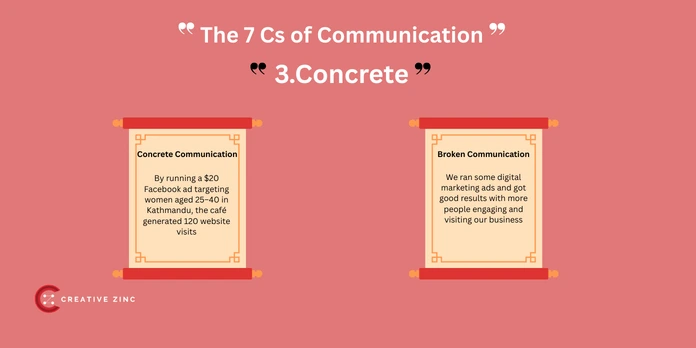
Concrete communication focuses on being specific rather than vague. It does not make general statements, but rather facts, examples, or simple descriptions that can be easily comprehended by people.
For example, a message is more powerful and credible when it contains clear numbers, features, or real examples. Customers can have a clear understanding of products, services, and benefits when brands communicate in a concrete manner, which contributes to the creation of confidence.
Correct

Right communication implies the use of correct information and language. This involves proper grammar, spelling, facts, and proper tone. Communication mistakes may cause a message to appear sloppy and decrease trust.
Professionalism and reliability are reflected when communication is proper. In the case of brands, accuracy is a sign of attention to detail and credibility among the audience.
Coherent
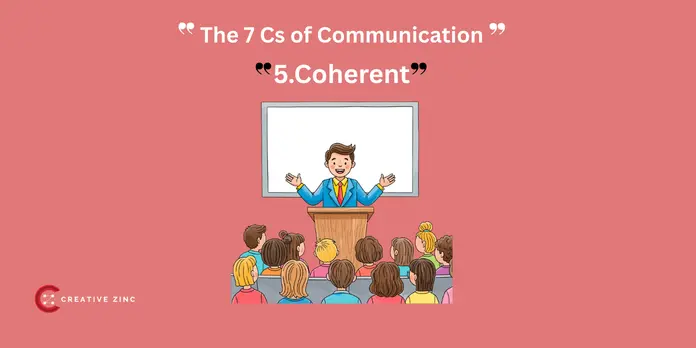
Coherent communication is logical and smooth-flowing. The ideas must be related and delivered in a systematic way that will enable the audience to follow the message to the end.
Tone, style, and message consistency also aid in ensuring consistency across various platforms. Communication becomes natural and easy to comprehend when it is coherent.
Complete
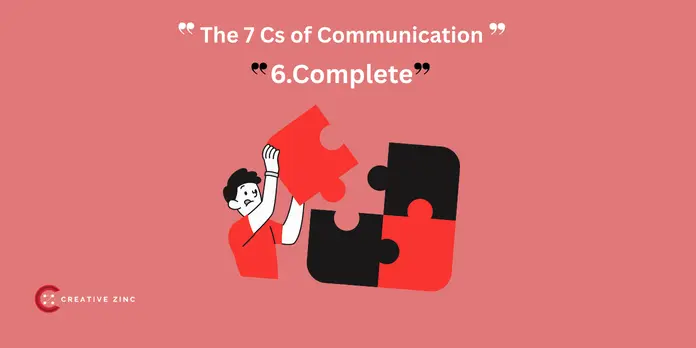
Full communication gives all the information required by the audience. A message must respond to the usual questions like what, why, how, and what to do next.
In the presence of complete communication, the audience does not feel left out or confused. To the brands, this will assist the customers in making informed choices and minimizing unnecessary back-and-forth communication.
Courteous

Respectful communication is polite to the audience. It speaks courteously and takes into account the emotions, interests, and views of other people. Courtesy can make communication positive even in cases where feedback or serious information is being passed.
Respectful communication will impress, build trust, and assist in long-term relationships with customers, teams, and partners.
How the 7 Cs of Communication Help Brands Grow
The use of the 7 Cs of Communication assists the brands in communicating their message clearly and effectively. When the message is clear and concise, audiences will get the message of the brand in a short time without confusion. This facilitates easy association of people with what the brand is trying to say.
Trust is developed through proper communication. The brands seem more credible and professional when they use certain details, correct information, and an appropriate tone. The customers are assured to interact with a brand that speaks the truth and is transparent.
Consistency in all platforms is guaranteed by coherent and complete communication. A properly organized message, whether it’s a webpage, a social media post, or an advertisement, makes the brand appear organized and reliable. Respectful and caring communication also enhances emotional attachment as it demonstrates respect and concern towards the audience. These principles combined assist the brands to gain attention, build trust, enhance engagement, and increase over time.
How the 7 Cs of Communication Help Leaders
The 7 Cs of Communication are also relevant in leadership. Effective communication assists leaders in clarifying goals, roles, and expectations in order to make team members understand what is expected. This saves confusion and enhances performance.
Concise communication is time-saving and helps teams to stay on track with “what is important”. Concrete and correct communication by leaders instills confidence in the employees and promotes trust. Coherent communication ensures that everybody is on the same track of vision, whereas complete communication ensures that the teams get all the information they require to effectively carry out their work.
Courteous communication helps leaders build strong relationships with their teams. When leaders communicate with respect and understanding, it creates a positive work environment and encourages collaboration. Overall, the 7 Cs provide leaders with a simple and effective way to communicate better and lead more successfully.
Conclusion
The 7 Cs of Communication are easy but effective concepts that enhance the exchange and reception of messages. These principles can be applied not only by brands or leaders but also by individuals to build a clear understanding, trust, and closer bonds.
By applying the 7 Cs consistently, communication becomes more effective, meaningful, and impactful. In the long run, strong communication leads to stronger brands, better leadership, and lasting success.