

AI tools for copywriting have revolutionized the way businesses, marketers, and content creators create content. Artificial intelligence can deliver tasks that would have taken hours of brainstorming and drafting within a shorter period. Ads and emails, as well as landing pages and blogs, AI tools for copywriting are becoming essential in modern content strategies.
With this said, these tools are effective as writing aids, but not substitutes. With proper application, AI copywriting tools can assist in expanding content generation without compromising its quality through human editing and strategy.
What Are AI Tools for Copywriting?
AI tools for copywriting refer to software platforms that can be automated to produce written content by utilizing artificial intelligence, natural language processing (NLP), and machine learning. These tools can learn the patterns, tone, and structure of language and create human-like copy through massive datasets.
Prompts are given by users, and the AI creates content in the form of headlines, blog posts, advertisement texts, and product descriptions. The majority of AI copywriters are not supposed to replace human intervention, but make the process faster and more efficient.
Why Use AI Tools for Copywriting?
Businesses adopt AI tools for copywriting for several reasons, as these tools help streamline content creation and improve overall efficiency.
Faster Content Creation
Copywriting AI tools can create drafts, headlines, and content ideas in a couple of seconds. This saves a lot of time in brainstorming, as well as preliminary writing. Teams can concentrate more on editing and refining instead of beginning afresh. This leads to an increase in the speed of content production.
Reduced Writing Costs
By engaging AI copywriting tools, the companies will reduce their reliance on big writing departments or agencies. Artificial Intelligence drafts save time spent manually and save hours of paid writing. This simplifies content creation, particularly among the start ups and small businesses. Over time, the savings can be substantial.
Consistent Tone and Messaging
Copywriting AI machines assist in keeping the voice of the brand unchanged on different platforms. As soon as the guidelines and prompts are established, AI can mimic the same tone in blogs, advertisements, and social media posts. This uniformity reinforces the brand name and message. It also minimizes mistakes brought about by inconsistencies in writing styles.
Easier Idea Generation
Copywriting AI tools are very useful in overcoming writer’s block. They can promptly propose headlines, outlines, and angles of content. This is much quicker and easier on the mental front. These ideas can be elaborated by writers creatively and strategically.
Improved Productivity
AI tools for copywriting automate repetitive and time-consuming writing tasks. This allows writers and marketers to focus on high-level planning, creativity, and optimization. Teams can produce more content without increasing workload. Overall productivity improves without compromising quality.
AI tools for copywriting enable teams to work on creativity and strategy and automate repetitive writing processes.
Top 4 Powerful AI Tools for Copywriting
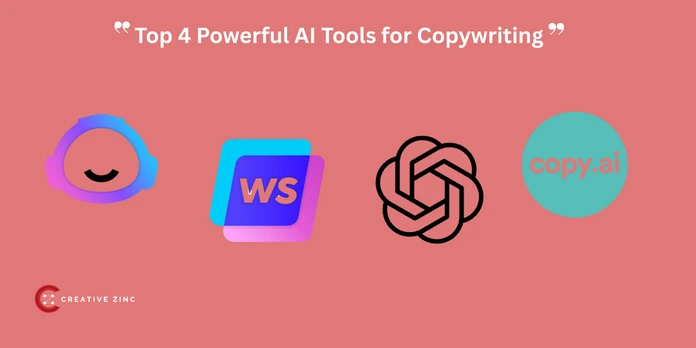
Among numerous options available, the four AI tools mentioned below can be considered as the best due to their functionality, versatility, and popularity in most industries:
1. Jasper
Jasper is among the most used copywriting AI tools, which is commonly used in blogs, advertisements, and web content. It is particularly renowned for its powerful long-form writing skills. The tool has marketing-oriented templates and the brand voice. Jasper is best suited to professional marketers and content teams.
2. Copy.ai
Copy.ai is most appropriate in marketing copy, which is short like a social media post, an email subject line, and an advertisement heading. It is easy to learn, and it also has pre-created workflows for common copywriting processes. This renders it a powerful option in regard to speedy and effective content development. Copy.ai is usually a favorite of startups and small teams.
3. Writesonic
Writesonic will write landing pages, products, and blogs that are search engine-friendly. It is targeted at marketers who desire performance-based content. Conversion-oriented copywriting is also supported in the platform. Writesonic works well for both content and marketing use cases.
4. ChatGPT
ChatGPT is a flexible AI tool for copywriting that adapts to multiple content types when prompted correctly. It has the capacity to produce blogs, advertisements, mails and innovative concepts. Its advantage is in customization and conversational output. ChatGPT is perfect when a user wants to have greater amount of control over tone and structure.
Some Other AI Tools for Copywriting
Apart from the top tools, there are several other AI tools for copywriting that serve specific or supportive purposes:
- Anyword – It is centered on conversion-oriented copy and also predetermines the performance of marketing content.
- Wordtune – Helps rewrite and improve existing content for clarity, tone, and engagement.
- QuillBot – This is a text-refining, paraphrasing, and summarizing tool that is widely used.
- Frase – Assists in creating copy that is oriented towards SEO by creating content briefs based on SERP analysis.
These AI tools for copywriting are useful additions depending on specific content needs, workflows, and goals.
Benefits of AI Tools for Copywriting
There are a number of benefits associated with using AI tools to write copy that make the business and content teams more productive.
Increased Writing Speed
Copywriting AI software is able to create drafts, headlines, and outlines in seconds. This saves a lot of time in case of manual writing and brainstorming. Authors can transition speedily from ideation to execution. As a result, content deadlines become easier to meet.
Scalable Content Production
Copywriting AI tools allow developing vast amounts of content without the growth of resources. Companies are able to create blogs, social media, advertisements, and email content at the same time. This scalability comes in particularly handy when expanding brands and marketing campaigns. It enables teams to increase their output without reducing efficiency.
SEO-Friendly Structure
Numerous AI copywriting assistants can be used to structure the text by using the correct headings, keywords, and logical organization. This enhances ease of reading and optimization for search engines. AI-generated drafts tend to be structured in a way that complies with the best practices in SEO. This structure can be further refined by human review in order to have better rankings.
Consistency Across Platforms
Copywriting AI solutions assist in keeping the tone and message constant across channels. Whether through blog, email, or social media posting, it can be of the same brand voice. Such consistency builds brand identity. It also reduces inconsistencies caused by multiple writers.
Reduced Workload for Teams
Using AI copywriters, content teams have to do fewer repetitive writing tasks, as these tools will automate them. Authors don’t need to take as much time to do usual drafts, but more time on planning and innovation. This results in the improved use of resources. On the whole, teams are more productive when not burn out.
When combined with human editing, AI tools for copywriting can significantly improve content quality, efficiency, and output.
Limitations of AI Copywriting Tools
Although they have positive qualities, AI copywriters are not totally free of limitations that should be considered by users.
Limited Originality and Creativity
Copywriting AI is created by using existing information and trends to produce a copy. This implies that they might not be in a position to generate genuinely original ideas or original creative perspectives. Although AI may help in the structure and drafting, it does not have human emotion and narrative. It still requires creative input by writers.
Risk of Generic or Repetitive Content
Unless appropriately prompted and edited, AI-generated copywriting software may deliver text that reads generically. Outputs may repeat similar phrases, sentences, or thoughts. This has the capability of diminishing the interaction and distinctiveness of the brand. Human review aids in customizing and narrowing the content.
Requires Human Editing and Fact-Checking
Intelligent copywriting tools do not necessarily ensure accuracy and contextual correctness. There can be outdated information, oversimplification, or inaccuracy of information. To ensure that facts are checked, clarity is enhanced, and that content is aligned with brand objectives, human editing is needed. This is done to guarantee quality and reliability.
That is the reason why copywriting AI tools are supposed to assist writers – not replace them.
How to Choose the Right AI Copywriting Tool
In choosing an AI tool to use in copywriting, it is necessary to consider your needs and workflow to ensure the optimal result.
Type of Content You Create
Various copywriting AI tools are formatted to suit various types of content. There are also those that can be best written in long-form blogs, and others that are the ones that specialize in ads, emails, or social media copy. Knowing what your main content is will reduce your selection of the correct tool. This guarantees that AI output is in line with your objectives.
Budget and Pricing Plans
AI copywriting tools differ in their cost, free, and paid versions. The companies ought to adopt a tool that meets their budget without compromising on basic functionalities. Some tools are charged per word limit or usage. It is important to analyze cost and value.
Ease of Use
AI copywriting tools are easier to implement in a team due to an easy-to-use interface. Simple dashboard tools and templates save time on learning complicated tools. This wastes less time during onboarding. The productivity is influenced by the ease of use.
SEO and Integration Features
Many copywriting AI tools provide built-in SEO services or integrate with third-party providers. Search visibility is enhanced with such features as the use of keywords, the format of the content, and optimization. It integrates with other existing tools, simplifying workflows. This enhances efficient content production.
The selection of the appropriate tool guarantees superior outcomes, a less complicated workflow, and increased levels of content.
Best Practices for Using AI Tools for Copywriting
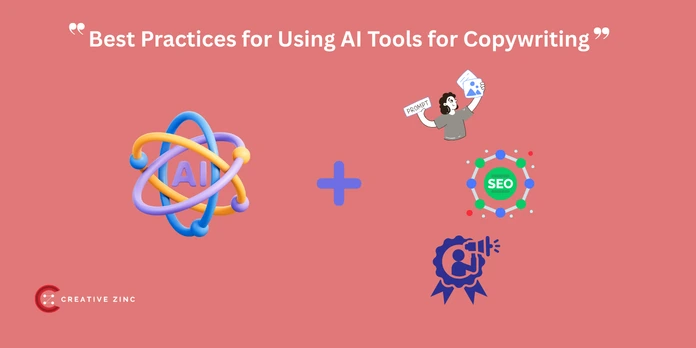
To get the best output from AI tools for copywriting, it’s essential to follow proven best practices.
Write Clear and Specific Prompts
The clarity of the prompt plays a crucial role in the quality of AI-generated content. Specific instructions are necessary for AI tools in copywriting because detailed instructions increase the relevance of their output. Vague prompts often lead to generic results. Clear prompts improve accuracy and usefulness.
Edit and Personalize AI-Generated Content
AI tools for copywriting provide strong drafts, but human editing is essential. Authors are supposed to improve tone, introduce knowledge, and eliminate mistakes. Individualization makes the content seem real. This measure enhances quality in general.
Maintain Your Brand Voice
Brand identity is very important in terms of consistency in tone and messaging. Brand voice instructions should be provided to AI-based copywriters. This assists in matching content between platforms. Human oversight ensures the voice remains natural and engaging.
Combine AI Output With SEO Tools
AI tools for copywriting work best when paired with SEO optimization tools. SEO platforms help refine keyword usage, structure, and readability. This combination improves search performance. It also ensures content meets both user and search engine expectations.
These practices help maintain quality, consistency, and authenticity while using AI tools for copywriting.
Are AI Tools for Copywriting Worth It?
Yes, AI-based copywriting tools can be helpful if they are used strategically and purposefully. They assist marketers and writers to create content more quickly, lessen manual work, and produce content on numerous platforms. These tools save time by automating repetitive activities such as drafting and developing ideas and redirecting to more creative and strategic activities.
However, human creativity, judgment, and experience are crucial in coming up with quality copy. Without instructions, AI copywriting tools are incapable of comprehending emotions, brand peculiarities, and the intent of an audience. The best method is a hybrid one, where AI is used to create the draft and structure, but humans do the editing, telling, and writing the story, accuracy and the brand voice. This is a combination that is efficient without affecting the quality.
FAQs
1) Can you use AI in copywriting?
Yes, it is true that AI is applicable in the copywriting process to generate ideas, drafts, headlines, and marketing copy. Copywriting AI can be used to improve the speed of writing and decrease manual labor. However, creativity, accuracy, and brand voice need humans. AI works best as a support tool rather than a replacement.
2) Can I make $5,000 a month with copywriting?
Yes, you can earn a moderate to high income using copywriting as long as you have high skills and regular clients. Freelance, agencies, and retainers are the most common ways for many professional copywriters to make such an amount. The AI tools that are used in copywriting are capable of assisting in boosting productivity and allowing one to tackle more projects. Income is based on experience, niche, and price approach.
3) What is the AI tool for copywriting?
There is no perfect AI tool for copywriting, but several popular ones are widely used. Tools like Jasper, Copy.ai, Writesonic, and ChatGPT help create different types of copy. Each tool specializes in specific use cases such as blogs, ads, or SEO content. The best tool depends on your content needs.
4) Can I use ChatGPT for copywriting?
Yes, ChatGPT can be used for copywriting across blogs, ads, emails, and social media content. With clear prompts, it can generate structured and engaging copy. However, it requires human edits to make sure that it is accurate and original. ChatGPT should be utilized as a drafting and brainstorming guide.