


In the contemporary competitive business world, mere acquisition of new customers is not sufficient to ensure the long-term growth of companies. Companies are currently paying much attention to retaining, enhancing satisfaction, and developing relationships with their clients from a long-term perspective. As a result of this change, there has emerged an essential position in the new organizations, namely, the customer success manager.
The task of a customer success manager is critical to make sure that a customer obtains the desired outcomes after the purchase of a product or service. Rather than attending to the customers only after they have encountered issues with the company, this professional is proactive to ensure that the customers get the best they can offer, stay involved, and keep associating with the brand.
Over the recent years, customer-centric approaches have become one of the key priorities of companies, and the customer success manager has become a crucial role in enhancing customer retention, churn reduction, and business growth. This role and the importance of its understanding can allow businesses to establish better relationships with their customers to reach success in the long term.
What Is a Customer Success Manager?
The customer success manager has taken its place as one of the pillars of new customer-focused organizations. It is a realization of business today that the sales of a product are just the start of the relationship with customers. It is also important to ensure that customers emerge successful with that product. A customer success manager is concerned with steering customers to favourable results, besides enhancing long-term relationships between the organisation and customers.
Why Customer Success Has Become Essential for Modern Businesses
The modern business environment is highly competitive, with a great number of options among the customers. A company is easily replaced by its competitors if it does not deliver a steady value.
A customer success manager also makes sure that customers always have access to the benefits of a service or product. They assist businesses in detecting any possible problems at an initial stage and avoiding customer dissatisfaction by tracking the level of engagement and consumer satisfaction.
This position is especially significant in such sectors of the industry as technology, online marketing, software solutions, and businesses based on subscriptions, where long-term relationships have a direct effect on the increase in revenues.
Customer Success Manager vs Customer Support vs Account Manager
Most individuals mistake the job of a customer success manager with customer support or account manager. Although these roles have some similarities, they are applied for different purposes in an organization.
Customer care is generally geared towards addressing technical or service-related problems that are reported by the customers. Account managers focus on sustaining business relationships and dealing with contracts or renewals.
A customer success manager, in turn, has a wider perspective by making sure that customers deliver results of significance. They are interested in making customers successful, such that the customer and the company gain from the relationship.
Why Customer Success Management Is Important for Businesses

Customer success management is one of the strategic priorities of organizations that are interested in sustainable growth. Companies have learned that there is no need to invest a lot in finding new customers since, in most cases, it may be cheaper to preserve good relations with current clients. The customer success manager is extremely important in making sure that the customer is satisfied, engaged, and loyal to the brand.
Increasing Customer Retention
Customer retention is one of the key tasks of a customer success manager. Customers will feel encouraged to use a product or service in order to stay within a long period when they are given constant support and guidance.
Retention is necessary since loyal customers will be buying again and will be able to help businesses to maintain a consistent flow of revenue.
Reducing Customer Churn
Customer churn happens when customers become non-users of a product or service offered by the company. A high rate of churning may have a serious effect on the profitability of a business.
A customer success manager is able to track the behavior of customers and detect any early signs of dissatisfaction. They mitigate these concerns, and consequently, the customers do not step out.
Increasing Customer Lifetime Value
Customer lifetime value is the amount of revenue a business might anticipate from a customer after forming a relationship with the company.
A customer success manager strives to add more value to this by keeping the customers experiencing the benefits of the product. Customers who are satisfied and interested will be more likely to renew their subscription or buy extra services when they are satisfied and engaged.
Strengthening Brand Loyalty and Trust
When a customer finds that a business cares about them and appreciates them, he/she tends to have a greater emotional attachment to the brand. A customer success manager can develop such relationships through personalized counseling and regular communications.
With time, such relationships turn satisfied customers into brand believers.
Driving Long-Term Revenue Growth
A customer success manager will help a company increase revenue by addressing the satisfaction and retention of customers. Loyal customers not only stay in the company but also refer other people to the firm, which creates more business opportunities.
Key Responsibilities of a Customer Success Manager
Being a customer success manager is based on assisting the customer in attaining the desired results and solidifying the bond between the customer and the organization. Their activities touch upon several steps of the customer process, including onboarding to long-term interaction.
Customer Onboarding and Implementation
The onboarding process is a very critical phase where customers initiate the use of a product or service for the first time. This transition is facilitated by a customer success manager in order to make it smooth and efficient.
In the onboarding process, the customer success manager assists the customers in the process of figuring out how to use their product effectively and get some early results. This early achievement is important in bringing the perception of the customer towards the brand in the long run.
Building Strong Customer Relationships
Customer success management is based on a strong relationship. A customer success manager is in constant communication with the customer to learn the needs, challenges, and goals of the customer.
Through open communication and personalized support, they foster trust and provide a good customer experience.
Monitoring Customer Health and Engagement
A customer success manager pays close attention to the customer interaction patterns with a service or a product. The level of engagement is a good measure of customer satisfaction and the use of the product.
By the early intervention of the customer success manager when the engagement drops, the customer can be worked with early to resolve the possible problems and retain the customer.
Providing Strategic Guidance to Customers
Customers usually depend on the experience of a customer success manager to make improved choices on product usage. The customer success manager assists customers in accomplishing their goals in a better way by providing them with strategic recommendations and best practices.
Identifying Upselling and Cross-Selling Opportunities
Although customer satisfaction is the main concern of a customer success manager, a close relationship with the customers also enables the latter to see an opportunity to offer more services or an upgrade that can be advantageous to the customer.
Acting as the Voice of the Customer Within the Company
The customers also give great feedback that can be used by the business to enhance their products and services. A customer success manager shares such insights with the internal teams, so that the company keeps on developing as per the customer requirements.
7 Powerful Ways Customer Success Managers Drive Business Growth

A customer success manager does not just keep relationships. Their activity has a direct impact on the business performance by enhancing customer satisfaction, retention, and increasing revenue in the long run.
1. Ensuring Customers Achieve Real Value
The ultimate goal of a customer success manager is to make sure that customers realize the tangible value of the product or service they buy.
2. Building Long-Term Customer Relationships
Good relationships bring about trust and loyalty. To strengthen the ties between customers and the company, a customer success manager will have frequent contact with the customers.
3. Identifying Growth Opportunities Through Customer Insights
Knowing customer needs and behavior, a customer success manager can find the prospects where customers can be offered more services or solutions.
4. Increasing Customer Retention Through Proactive Support
A customer success manager does not wait till something goes wrong; instead, he/she identifies the problems before they go wrong.
5. Enhancing Customer Experience Across the Entire Journey
The customer success managers make sure that each point of the customer experience is positive, delivering the best experience possible.
6. Helping Companies Improve Their Products and Services
A customer success manager can gather customer feedback that can be very useful in assisting companies to improve their offerings.
7. Turning Happy Customers Into Brand Advocates
The happy customers usually spread their good experiences to others, and this helps them to acquire new customers by reference and word of mouth publicity.
Essential Skills Every Successful Customer Success Manager Needs
A customer success manager position demands a combination of various skills, including technical expertise and effective interpersonal skills. These specialists have to manage customer relations, strategic thinking, and data analysis in order to produce meaningful results.
Communication and Relationship-Building Skills
The customer success manager should be able to interact with customers who belong to diverse backgrounds and sectors.
Problem-Solving and Critical Thinking
Customers tend to struggle when they are using a product or service. These problems should be analyzed and practical solutions offered by a customer success manager.
Data Analysis and Customer Insights
Customer behavior is important in determining opportunities and avoiding possible challenges.
Product and Industry Knowledge
A customer success manager must be well acquainted with the product or service he or she is supporting.
Strategic Thinking and Business Understanding
Customer success managers have to know the contribution of customer success to the overall business growth.
Empathy and Customer-Centric Mindset
Empathy enables a customer success manager to be aware of the customer’s problems and offer valuable assistance.
Tools and Technologies Used by Customer Success Managers
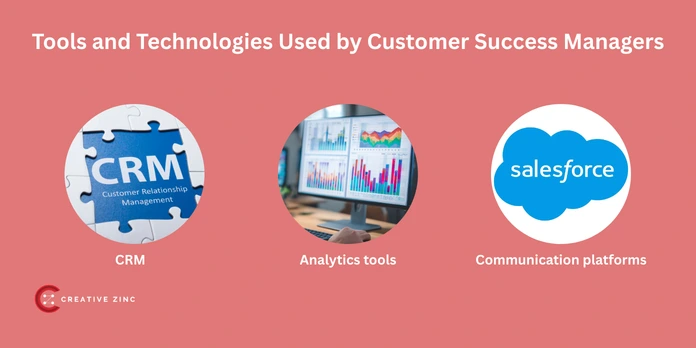
Contemporary customer success management is very dependent on technology. The customer behavior, analyzing the engagement patterns, and staying in close contact with customers could be managed with the help of various tools that assist a customer success manager.
Customer Relationship Management Tools
CRM systems contain useful customer data and can assist a customer success manager in managing customer relationships better.
Customer Success Platforms
Firms can monitor customer health scores and engagement rates on specialized customer success platforms.
Analytics and Data Tracking Tools
Analytics programs assist a customer success manager in assessing customer performance and drawing trends.
Communication and Collaboration Platforms
Efficient communication tools would help the customer success manager to be in touch with the customers and internal teams consistently.
Customer Success Manager Career Path and Opportunities
Customer success management requires skilled professionals, the demand for which is only increasing as businesses attach more importance to customer satisfaction and customer retention. It is now being understood by many organizations that a customer success manager is a strategic player in ensuring sustainable growth and the formation of lasting customer relationships.
Entry-Level Roles in Customer Success
Those who desire to work as a customer success manager usually start at low-level jobs as a customer support specialist, client success associate, or account coordinator. Through these jobs, one gets a good experience in dealing with customers and learning how businesses help their clients.
These functions enable the professionals to understand how to communicate with the customers, problem-solving, and establish the background of the skills needed to advance to the more advanced roles in customer success management.
Career Progression in Customer Success Management
The position can be transitioned to that of a customer success manager as professionals build experience and excellent performance. At this point, they will have a more significant role in customer relationship management, process guidance, and consumers attaining worthwhile outcomes.
Having additional experience, a customer success manager can become a senior customer success manager, like Senior Customer Success Manager, Customer Success Team Lead, or Customer Success Director. These functions are team management, creation of customer success, and managing large client portfolios.
Salary and Industry Demand for Customer Success Managers
The supply of qualified experts in this sector is on the rise in technology, digital marketing, SaaS, finance, and consulting sectors. The businesses are aware that an effective customer success manager may play a great role in retaining their customers and generating revenue over time.
This means that senior customer success managers are likely to be offered high salaries and career advancement. They are immensely valuable in modern organizations because of their potential to build customer relationships and make a business a success.
Common Challenges Faced by Customer Success Managers
As much as the customer success manager job is fulfilling and effective, there are a number of challenges associated with it. Good customer management skills, patience, and strategic thinking make a delicate balance to ensure good customer expectations are managed, and internal collaboration remains high.
Managing Multiple Customers and Accounts
As a customer success manager, one is likely to deal with many clients at the same time, and they all differ in goals, expectations, and their communication preferences. To handle various accounts, one needs to be very organized and time-conscious.
There are some cases when it is difficult to balance the needs of various customers and provide them with the necessary attention, which is particularly relevant in rapidly expanding companies with a continuously growing number of customers.
Balancing Proactive and Reactive Support
Although the main job of a customer success manager is to be a proactive member of customers, sometimes, due to unexpected circumstances that appear, it is necessary to act right away.
It may be challenging to strike a balance between proactive action and reactive problem-solving. The best customer success manager should be able to delegate tasks efficiently, while making sure the customers never feel unsupported.
Aligning Customer Expectations With Company Capabilities
Customers tend to have big expectations in terms of the results they wish to get. In other instances, such expectations may not be in line with the current capabilities or product features of the company.
The customer success manager has to handle such expectations with a lot of care by being able to communicate openly and ensuring that the customers know what to expect.
Coordinating Between Multiple Internal Teams
Customer success managers often work with many other departments within a company, including product development, sales, marketing, and customer support.
This may be complicated in ensuring that there is smooth communication between these teams. An effective customer success manager should be a liaison between departments to ensure that the needs of the customers are met.
Future Trends in Customer Success Management
Customer success management keeps on changing as companies embrace the use of new technologies and customer demands increase. The customer success manager position is growing to have more data-driven insights and strategic business impact than the sphere of relationship management.
AI and Data-Driven Customer Insights
Business intelligence is being redefined by artificial intelligence and other sophisticated analytics tools that enable companies to learn the behavior of their customers. These technologies can enable a customer success manager to understand the usage patterns, anticipate potential problems, and discover ways to enhance customer engagement.
Predictive analytics allows the customer success managers to understand the needs of customers and offer solutions ahead of issues arising.
Digital and Automated Customer Success
Robots are becoming commonplace in simplifying manual processes like customer check-ins, communication onboarding and monitoring, and customer engagement.
Such tools enable a customer success manager to have more time and energy working on meaningful relationships with customers instead of on administrative duties.
Personalized Customer Experiences
The customers of the modern world demand customized experiences to consider their individual goals and problems. A customer success manager is the key contributor to this kind of personalization, as they learn what each customer wants to achieve and provide specific advice to them.
Strategic Role of Customer Success in Business Growth
The Customer success teams in most organizations have become strategic when it comes to making business decisions. The knowledge acquired by a customer success manager can assist the companies in the improvement of products, the enhancement of marketing strategies, and the discovery of new areas of growth.
The role of the customer success manager will keep on increasing as customer success gains an infiltration into the overall business strategy.
How Businesses Can Build an Effective Customer Success Strategy

The creation of an effective customer success strategy needs to be planned properly, and it should be dedicated to the center of business activity. Companies that undertake good customer success practices are in a better position to develop strong customer relationships and enjoy sustainable growth.
Defining Clear Customer Success Goals
The initial procedure of establishing a robust plan includes the formation of clear objectives to serve the customers. These objectives can be better customer retention, customer lifetime value, and the better customer satisfaction.
A customer success manager liaises intimately with leadership to see to it that these goals resonate with the overall business strategy of the company.
Investing in the Right Tools and Technology
In the current customer success management, technology is crucial. Firms need to invest in tools that enable a customer success manager to monitor the level of engagement, the health score of customers, and improvement opportunities.
These tools are very informative and thus enable businesses to make the right decisions and to maximize customer relational aspects.
Creating a Customer-Centric Culture
A customer success strategy needs all the departments of an organization to work together to ensure success. The sales, marketing, product development, and customer support teams need to collaborate in order to provide a steady value to customers.
The customer success manager tends to be the focal point between these departments and makes sure that the needs of the customer take precedence.
Continuously Measuring Customer Success Metrics
To achieve better customer success rates, companies need to measure performance on a regular basis using such key metrics as retention rate, churn rate, and customer satisfaction scores.
These metrics are analyzed by a customer success manager to determine the areas where the organization can improve and work out the strategies contributing to strengthening customer relationships.
Conclusion
The customer success manager has become an important role in the current business world that deals with customers. Businesses are no longer successful because they are able to sell goods or services, but to provide the customers with real and lasting benefits from the services or goods provided.
A customer success manager aids businesses to achieve low churn rates, greater retention, and revenue growth by leading the customers through the onboarding process, ensuring a good relationship, and providing strategic support. Their capacity to convert happy customers into their close supporters establishes a strong competitive edge for companies.
With the ever-changing nature of industries and the increasing demands of customers, any business that invests in powerful customer success strategies will be in a better place to develop meaningful relationships and ultimately become successful in the long run. The customer success manager will be at the heart of this change and will see to it that both the customers and the companies flourish.