

With the digital environment being overcrowded, merely emailing customers is no longer sufficient to entertain them and make sales. Companies require a strategic program that will steer subscribers through all the contacts with the brand. This organized process is called the email marketing customer journey and enables marketers to reach their audience at the appropriate time using relevant and personalized content. Knowing every phase of this path, companies may become more engaging, develop leads successfully, and achieve customer loyalty.
This article aims to offer an all-inclusive roadmap that the business can use to design and adopt an effective email marketing strategy that will not only translate leads into customers but also brand advocates.
What is an Email Marketing Customer Journey?
Email marketing customer journey refers to the number of interactions a potential or existing customer has with your brand via email. Each email can be used to form the perception of a person and influence the actions of a person since the moment he/she subscribes to your email list to the moment when he/she makes the purchase and further.
This journey is important to understand since it enables marketers to get the appropriate message at the appropriate time so that each email is beneficial to the experience of the subscriber. A properly designed customer journey will assist in enhancing the level of engagement, decreasing unsubscribes, and boosting the chances of making a second purchase.
Definition and Importance
In essence, a customer journey is a map of the way an individual interacts with a brand. In email marketing, it determines when emails can be used to make a decision and to build a relationship. Businesses can make their campaigns much more effective by sending different messages to a subscriber depending on their behavior, preferences, and the phase in the buying process.
Why It Matters for Businesses Today
The number of emails being sent every day is too great to be satisfied with snappy subject lines or glitzy graphics to be considered memorable. Email marketing customer journey makes every contact matter significantly. Firms that utilize this strategy have better open rates, better click-through rates, and end up getting better returns on their investment. The journey can also enable businesses to understand customer behavior, which in turn will help them to refine their campaigns and develop a better marketing strategy, as time goes by.
Key Stages of the Email Marketing Customer Journey
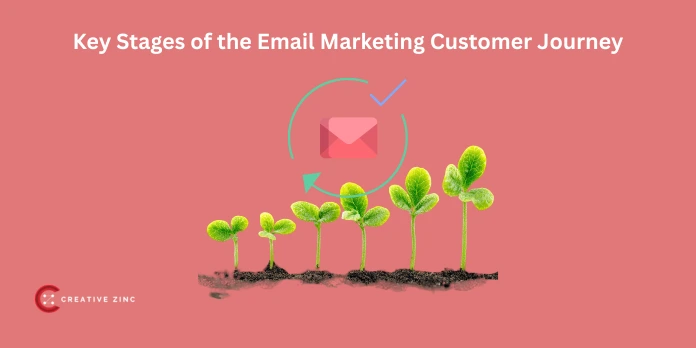
An effective email campaign is based on a proper knowledge of the steps the subscribers will take. The email marketing customer experience is usually a series of steps which are aimed at taking the audience to the next stage of becoming loyal customers. Although these stages are sequential, it is necessary to mention that customer behavior is not always linear; people can jump over stages, revert to them, or need more nurturing.
Awareness – Introducing Your Brand
The first point of contact between your brand and potential customers is the awareness stage. The main objective is to create a good first impression, create credibility, and draw attention. At this point, you might not be aware of what the audience is aware of your products or services, so the emails should not be about sales, but should undertake the role of educating and creating value.
The trick during awareness is to present content that will appeal to the needs, challenges, or interests of the audience. This may be in the form of introductory emails, useful guides, or tips, which may place your brand as an expert and reliable source of information. By sacrificing in the short-term, you will be able to get subscribers to respond more to your brand.
An example of awareness emails:
- Introduction to your brand story through welcome emails.
- Educational newsletters
- Ebooks or checklists (free).
Consideration – Nurturing Leads
When the subscribers have heard about your brand, they get into the consideration stage. In this case, the potential customers are weighing their alternatives and are trying to find information to enable them to make the right decisions. The email messages at this step must aim at showing how your brand is valuable, providing information, and answering frequently asked questions or concerns.
The factor of personalization is important in the nurturing of leads. You can target your content to each audience and make it work by dividing your audience according to the interests, behavior, or demographics of the audience. Cases, tutorials, and product comparisons would be useful in making the prospects know why your brand is the best.
Key tactics for consideration emails:
- Present educational materials that deal with pain points.
- Provide case studies or a history of success.
- Make product advantages and comparisons.
Conversion – Encouraging Action
The conversion stage is a stage that converts subscribers to paying customers. The emails at this stage are to be aimed at prompt action, i.e., purchasing a product, getting a service, or downloading a resource. The successful conversion emails are personalized, urgent, and have clear calls-to-action in order to achieve more.
Although it is often seen that promotional emails are effective at this point, it is important to offer value and relevance, but not to be pushy at this point. Emails triggered by the system can be used to persuade the customer to make a purchase, abandoned carts, and special offers for a limited time can be highly effective.
Tips for conversion emails:
- Offer personalized offerings with regard to browsing.
- Add effective and prominent calls-to-action.
- Make follow-ups to complete purchases.
Retention – Building Long-Term Loyalty
Getting a customer does not stop at that point. The retention phase is aimed at sustaining the interest, as well as persuading the purchase again. Retaining customers through customer loyalty helps businesses to grow customer lifetime value and decrease churn.
The retention emails frequently feature loyalty programs, personal recommendations, and exclusive offers. Loyalty is also enhanced through educational material that enables the customers to get the best out of their purchases. This is aimed at ensuring that there is a positive experience that makes the customers come back.
Retention strategies:
- The reward programs and special discounts.
- Personalized product suggestions
- Educational or use information on bought products.
Advocacy – Turning Customers into Promoters
Advocacy entails the encouragement of happy customers to market your brand to other customers. When properly carried out, this step utilizes the word-of-mouth promotion and accredits trust with social proof. Customers can be invited to post their reviews, experience, or join referral programs using Emails.
Advocacy promotion is also a method that assists in obtaining new customers at a cheaper cost, as well as enhances relationships with the existing ones. It can be emphasized by using user-generated content or community stories that will make one feel like a part of the community and get more involved.
Advocacy email examples:
- Review and testimonial.
- Referral incentive programs
- Showcasing user-generated content
Re-engagement – Reviving Inactive Subscribers
Consequently, in the long run, the subscribers will either lose interest or become inactive. The idea behind re-engagement campaigns is to get them interested again and re-engage them. Such emails must be personal, inviting, and valuable, but not generic and intrusive.
It is important to know the reason subscribers lose interest. Their interest can be revived by the use of surveys, special offers, or reminders. Businesses can use this by having an active and responsive email list that ensures the maximum use of all contacts.
Re-engagement strategies:
- Sends personalized emails with the message, We miss you.
- Extra special offers to take.
- Feedback Surveys to improve campaigns and gather feedback.
Mapping Your Email Marketing Customer Journey
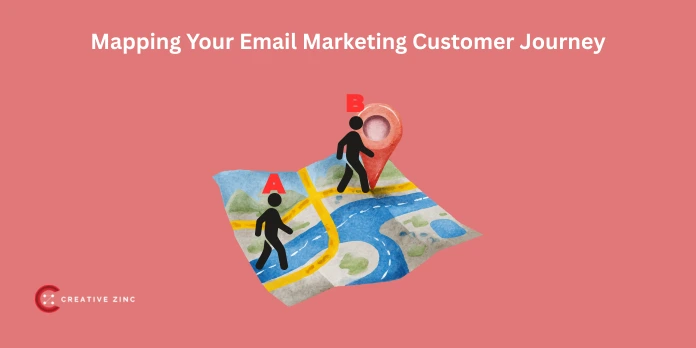
The development of an efficient email marketing customer journey is a process that should be planned well. By mapping the journey, you are able to know touchpoints, develop personalized messages, and optimize every step to engage and get conversions.
Step 1 – Understand Your Audience
Begin with the analysis of your audience demographics, behaviors, and preferences. Develop rich buyer portraits that indicate the motivations, struggles, and ambitions of your subscribers. This makes sure that your emails are topical and appeal to the targeted audience.
Step 2 – Identify Touchpoints
Record all the contacts that a subscriber can have with your brand. These are the visits to the websites, communication via social media, product requests, and email communication. By mapping out these touchpoints, one is able to identify the timing and content of each email to use the best time possible.
Step 3 – Automate Strategically
Automation will guarantee the delivery of messages on time without the need for manual efforts all the time. Communications are personalized and relevant with triggered emails, depending on the behavior of the subscriber, including but not limited to sign-ups, abandoned carts, or milestones.
Step 4 – Measure and Optimize
Monitor such metrics as open rates, click-through rates, conversions, and unsubscribe rates. Use these observations to keep on enhancing your campaigns. A / B testing of subject lines, content, and time will enable you to perfect your strategy and maximize the results.
Best Practices for Email Customer Journeys
These are the best practices to be followed in order to achieve success:
- Personalization: Personalize emails to the behavior and preferences of individual subscribers.
- Timing and Frequency: Do not send so many emails, but be strategic in terms of timing in order to get more attention.
- Mobile-Friendly Design: Make sure that emails are shown on any device.
- Convincing Copy: Power words and convincing stories should be used to draw one’s attention.
- Distinct Calls-to-Action: It should be easy for the subscribers to do what they want.
Common Mistakes to Avoid

Even the most thought-out email journeys may not work if the given pitfalls are missed. Common mistakes include:
- Sending too many emails, and they unsubscribe.
- The neglect of personalization and segmentation.
- Neglecting mobile responsiveness
- Not analyzing data and maximizing campaigns.
The prevention of the above errors will guarantee your email marketing customer experience to be successful, interesting, and result in quantifiable outcomes.
Tools to Enhance Email Marketing
The current email marketing depends on technology to automate, segment, and optimize emails. The Salesforce Marketing Cloud, HubSpot, or Mailchimp tools enable companies to design advanced customer experiences with little manual work. Personalization with the help of AI, advanced analytics, and automation features can help to maximize engagement and conversions.
Conclusion
Customer journey in email marketing is a vital framework to direct the subscribers through the customer loyalty and advocacy stages. Knowing every step, mapping touchpoints, customizing content, and evaluating outcomes help businesses to make their campaigns not only interesting but also profitable.
Begin creating your email customer experience now to boost your engagement, increase conversions, and transform customers into repeat promoters. Email marketing can be one of the most useful instruments in your marketing toolbox, with careful planning and execution.
FAQs:
What is email marketing customer journey?
The email marketing customer journey is the journey that a subscriber goes through after the first engagement till the time when he or she becomes a loyal customer. It encompasses such stages as awareness, consideration, conversion, and retention. Every step involves specific emails that direct the users to any meaningful actions.
What is the importance of the email marketing customer journey?
The email marketing customer journey assists companies in getting the appropriate message at the appropriate time. It enhances interaction, boosts conversion, and customer relations. A professional travel plan will make the emails either meaningful or not annoying.
What is your best practice of building an efficient email marketing customer journey?
Begin by knowing your audience and mapping the important touchpoints in the journey of the audience. Automation will be used to send customized emails depending on the user behavior. Monitor performance constantly and make campaigns more effective.
What are the major steps of email marketing customer journey?
The principal steps consist of awareness, consideration, conversion, retention, advocacy, and re-engagement. Each phase has a given purpose of guiding the customer. Individual email tactics at each step would guarantee that there is more engagement and loyalty.